Secured Credit Cards: Your First Step for ITIN Credit
Secured Credit Cards: Your First Step for ITIN Holders
Last updated: September 26, 2024.
If you're new to the U.S. financial system and hold an Individual Taxpayer Identification Number (ITIN), establishing a payment history can seem challenging. Without a Social Security Number (SSN) and a prior history, many traditional financial products are out of reach. This is where a secured card becomes a key starting point.
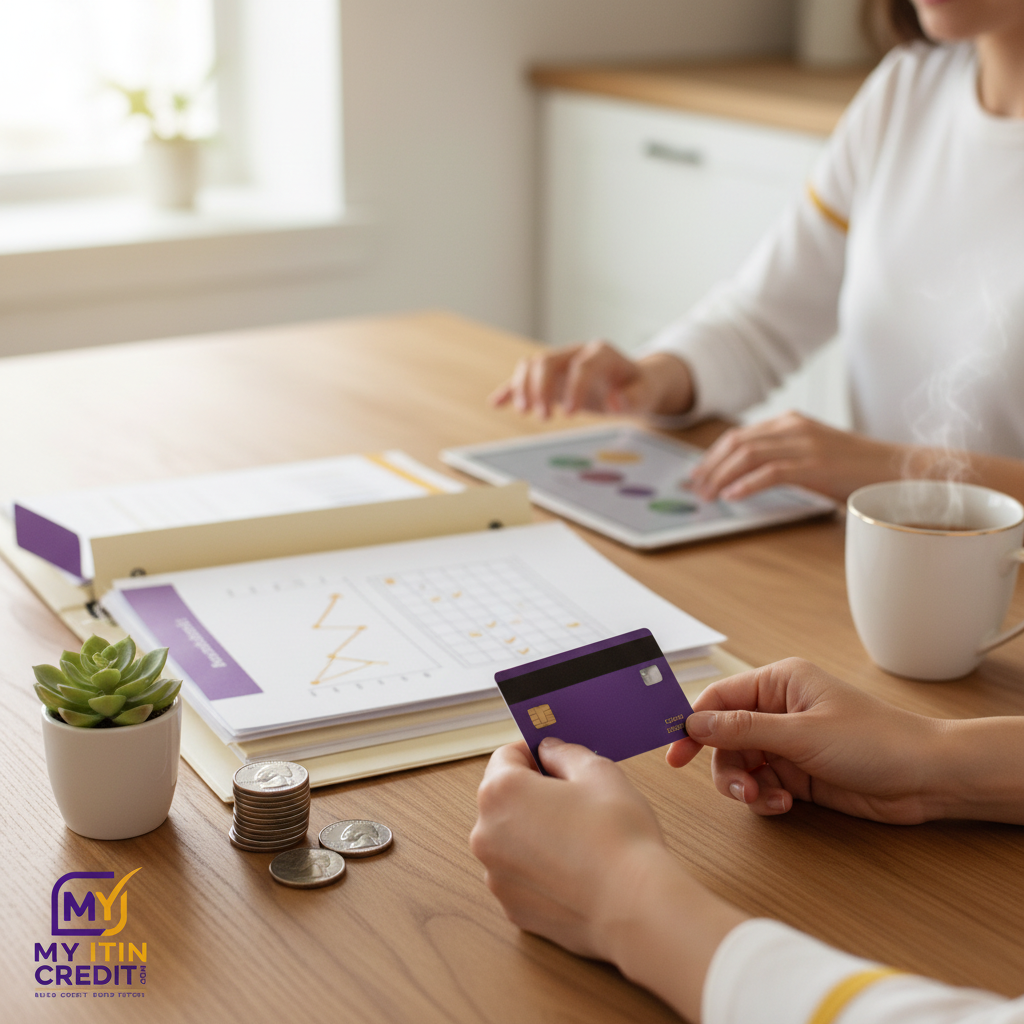
A secured card works much like a regular credit card, but it requires an upfront cash deposit (S1). This deposit serves as collateral, reducing the risk for the lender and making it accessible to those with no history. For ITIN holders, this type of card offers a practical path to begin building a positive payment history.
What is a Secured Card?
Asecured card is a type of credit card that requires you to provide a security deposit to the issuer (S1). This deposit usually matches your spending limit. The bank holds onto this deposit as collateral and extends a spending line matching the deposit amount (S2). This collateral minimizes the risk for the card issuer, potentially making it easier for individuals without an established credit history to get approved.
Unlike a debit card, a secured card can help you build payment history because your activity is generally reported to credit reporting companies (S2).
How Secured Cards Help ITIN Holders Build Payment History
For ITIN holders, the challenge often lies in the absence of an SSN and a U.S. credit report. Lenders use your credit report to assess your trustworthiness as a borrower. If you have no report, they have no information to base a decision on. Secured cards can help bridge this gap.
When you use a secured card responsibly, the issuer generally reports your payment behavior to credit reporting companies (S2). This information contributes to a credit file under your ITIN. Over time, a consistent pattern of on-time payments and low utilization can help you build a positive payment history, which is essential for future financial goals like qualifying for loans or mortgages. It's always a good idea to confirm with the card issuer that they report to major credit reporting companies (S2).
Secured vs. Unsecured Cards: Key Differences
Understanding the distinction between secured and unsecured cards is important when choosing your first financial product. Secured cards require collateral, unlike unsecured cards (S3).
| Feature | Secured Card | Unsecured Card |
|---|---|---|
| Collateral Required? | Yes, a refundable security deposit (S3). | No, not typically. |
| Credit History Needed? | Often designed for those with no or limited credit history. | Usually requires an established credit history. |
| Spending Limit | Typically equals your security deposit (S2). | Based on your creditworthiness and income. |
| Risk to Lender | Lower due to the deposit. | Higher, as there is no collateral. |
| Path to Upgrade | Can potentially graduate to an unsecured card with good use (S2). | Does not require graduation, already unsecured. |
| Accessibility | Can be more accessible for new immigrants and ITIN holders. | Can be less accessible for those new to U.S. financial services. |
Unsecured cards do not require a deposit because approval is based solely on your creditworthiness and income. To qualify for an unsecured card, you generally need an existing credit history that demonstrates responsible borrowing. This is why secured cards are often considered a first step for those new to borrowing, including many ITIN holders.
Finding Secured Cards That Accept ITINs
Many mainstream banks and credit unions offer secured cards and are familiar with processing applications from ITIN holders. While requirements vary, you will generally need to provide your ITIN, proof of address, and identification documents. Some may also ask for income verification.
When researching options, look for cards that explicitly state they accept ITINs or that do not require an SSN for application. Be prepared to provide additional documentation. You might find a good starting point by reviewing our article on how to build credit with an ITIN.
Step-by-Step: Applying for a Secured Card with an ITIN
Applying for a secured card as an ITIN holder involves a few key steps. Being prepared can make the process smoother.
- Gather Your Documents: You'll need your ITIN, a valid government-issued ID (like a passport), proof of U.S. address (utility bill, lease agreement), and potentially proof of income (pay stubs, tax returns). Some banks may also ask for a U.S. bank account.
- Research Lenders: Look for banks or credit unions known to work with ITIN holders. Check their application requirements carefully.
- Choose a Card: Compare annual fees, interest rates, and minimum deposit requirements. Ideally, choose a card with no annual fee or a very low one.
- Submit Your Application: You can often apply online, but some banks might require you to apply in person at a branch. Be prepared to provide all requested information accurately.
- Fund Your Deposit: Once your application is approved, you'll need to provide the security deposit before the card is issued. This can usually be done via a bank transfer, check, or money order.
Remember, the goal is to get approved and then use the card responsibly. This initial step is about establishing a positive payment history, which is fundamental to building a credit profile with an ITIN.
Expert Insight
Secured cards are often considered a foundational block for anyone new to the U.S. financial system, and that's especially true for ITIN holders. The refundable deposit mitigates risk for lenders, which can make them more willing to issue cards to individuals without an established credit history. The key to making this strategy effective is consistent and responsible usage. Treating your secured card like a debit card – spending only what you can afford to pay back immediately – while ensuring on-time payments, is how you can demonstrate creditworthiness. This activity can contribute to building your credit file under your ITIN, which may help you qualify for other financial products in the future. You can learn more about how your credit profile develops by reviewing our articles on ITIN credit report and ITIN credit score.
Responsible Use of Your Secured Card
Once you have your secured card, responsible management is essential to building a strong payment history. Your actions with this card can directly impact the credit report being built under your ITIN.
- Pay on Time, Every Time: This is a crucial factor in your credit profile. Make sure you pay your full statement balance before the due date each month. Setting up automatic payments can help prevent missed payments.
- Keep Your Utilization Low: Credit utilization refers to how much of your available spending limit you are using. Keeping utilization low (e.g., below 30%) can be beneficial for your credit score.
- Don't Close Old Accounts: Consider keeping older accounts open as the length of your credit history can be a factor in your score calculation.
- Monitor Your Credit Report: Regularly check your credit report to ensure accuracy. Mistakes can happen, and you want to catch them early. You can get free copies of your credit report from AnnualCreditReport.com.
By following these practices, your secured card can serve its purpose effectively: helping you build a positive payment history under your ITIN.
When to Consider Upgrading to an Unsecured Card
The goal of using a secured card is often to "graduate" to an unsecured card. This means the issuer returns your deposit and converts your account to a standard unsecured card, or you apply for a new unsecured card elsewhere. This can happen once you've demonstrated a pattern of responsible payment behavior.
Look for these signs that might indicate you're ready:
- Consistent On-Time Payments: You've paid your secured card bill on time every month for an extended period, often at least 6-12 months.
- Low Utilization: You consistently keep your balances low relative to your spending limit.
- Building Credit History: You have established a positive payment history that is improving over time.
- Offers from Lenders: You might start receiving pre-qualified offers for unsecured cards from other lenders.
Some secured cards automatically review your account for upgrade eligibility. Others may require you to request a review. When you're ready to explore options, researching credit card approval odds for ITIN holders and what lenders check can be helpful.
Other Ways to Build Payment History with an ITIN
While secured cards are an excellent starting point, they are not the only option for ITIN holders to build payment history. For a comprehensive overview, explore our guide on how to build credit.
Navigating Scores and Reports with an ITIN
Once you start using a secured card, you'll begin to generate a credit report and eventually a credit score. Understanding these is vital for your financial future.
Your credit report is a detailed history of your borrowing and payment activity. It includes information about your accounts, payment history, and any inquiries into your history.
A credit score is a numerical summary derived from the information in your credit report. Lenders use this to assess potential risk. Monitoring your credit report and score can help you track your progress and identify any potential issues. Services like MyFreeScoreNow (provided by our affiliate partner) provide credit monitoring. You can delve deeper into these topics by reading about ITIN credit score and ITIN credit report.
FAQ
Can I get a secured card with only an ITIN and no SSN?
Yes, many banks and financial institutions offer secured cards to ITIN holders who do not have an SSN. You will need to provide your ITIN, along with other identification and address verification documents.
How much do I need for a security deposit on a secured card?
Your spending limit will typically be equal to the amount of your deposit (S2). The bank holds onto this deposit as collateral and extends a credit line matching the deposit amount (S2). Once approved, you deposit an amount of money into a separate account (S2).
How long does it take to build payment history with a secured card?
Building a positive payment history takes time and consistent, responsible behavior. Generally, you can build credit with a secured card, but be sure to ask your card issuer about reporting to the credit reporting companies (S2).
Will my security deposit be returned?
Yes, the security deposit is refundable (S3). It is usually returned to you when you close the account in good standing, or if the card graduates to an unsecured card and the issuer no longer needs the collateral (S2).
Can a secured card hurt my payment history?
A secured card can hurt your payment history if you do not use it responsibly. Missing payments, paying late, or maxing out your card and carrying a high balance will negatively impact your credit report and score.
What happens if I don't pay my secured card bill?
If you don't pay your secured card bill, you will incur late fees, and your credit score will be negatively affected. Persistent non-payment can lead to the issuer closing your account and potentially using your security deposit to cover the outstanding balance.
Is an credit score different from an SSN score?
Credit scoring models use the information available in your credit report to generate a score. The information linked to your identifier (ITIN or SSN) is what determines your score. While scoring models apply consistent criteria, the specific score can vary based on the unique financial data associated with an individual's identifier.
Where can I check my credit report with an ITIN?
You can get free copies of your credit report from AnnualCreditReport.com. Additionally, you can sign up for credit monitoring services, like MyFreeScoreNow (provided by our affiliate partner), which can help you track your reports and scores.
Conclusion
A secured card is an excellent and often essential first step for ITIN holders looking to establish a payment history in the United States. By providing a refundable deposit, you gain access to a financial product that can report your responsible financial behavior to credit bureaus. This diligent use can help build the foundation of your credit profile, which is critical for future financial milestones like renting an apartment, obtaining an auto loan, or potentially qualifying for an ITIN mortgage credit score.
Starting your journey can feel complex, but with the right tools and information, you can work towards building a strong financial future.
Sources
- FTC Consumer Advice — https://consumer.ftc.gov/topics/secured-credit-card
- CFPB — Building credit from scratch — https://files.consumerfinance.gov/f/documents/201612_cfpb_credit_invisible_checklist.PDF
- FTC — Comparing Credit, Charge, Secured Credit, Debit, or Prepaid Cards — https://consumer.ftc.gov/articles/comparing-credit-charge-secured-credit-debit-or-prepaid-cards
- myFICO — What's in your FICO Scores? — https://www.myfico.com/credit-education/whats-in-your-credit-score
- FTC — Free Credit Reports — https://consumer.ftc.gov/articles/free-credit-reports
Related guides in this series
- ITIN Credit Cards: Navigate Your Options for 2026
- Understanding Different ITIN Credit Card Types
- Building Credit: Your First ITIN Credit Card Without an SSN
- Banks Issuing Credit Cards to ITIN Holders in 2026
- Increase Your ITIN Credit Card Approval Odds
- Building Credit with ITIN Store Cards: Your Retail Options
Herramientas rápidas de crédito
Pruébalas ahora. No guardamos lo que escribes.
Usar una parte menor de tu crédito disponible generalmente ayuda a tu puntaje. Es una estimación educativa.
¿Por qué importa monitorear tu crédito?
Respuesta corta: te permite ver lo que ven los prestamistas, corregir errores y notar fraudes a tiempo — algo especialmente útil cuando construyes crédito con un ITIN.
Los 3 burós pueden mostrar datos distintos
Equifax, Experian y TransUnion no siempre reciben la misma información, así que tu puntaje puede variar entre ellos.
Los errores pasan — y se pueden disputar
Si ves una cuenta, nombre o dirección incorrecta, tienes derecho a disputarla con el buró.
Detecta actividad sospechosa antes
Las alertas de nuevas cuentas o consultas te ayudan a reaccionar rápido ante posibles fraudes.
Ve si tu esfuerzo funciona
Seguir tu puntaje mes a mes muestra si tus pagos a tiempo y saldos bajos están dando resultado.
Fuente: FTC — Disputing errors on your credit reports. MyITINCredit es educativo; los reportes, puntajes y monitoreo los ofrece MyFreeScoreNow.
Artículos relacionados
Artículos relacionados que te pueden interesar.
ITIN Credit Cards: Navigate Your Options for 2026
Unsure where to start with ITIN credit cards? This 2026 guide breaks down types, approval strategies, and how to build strong credit without an SSN.
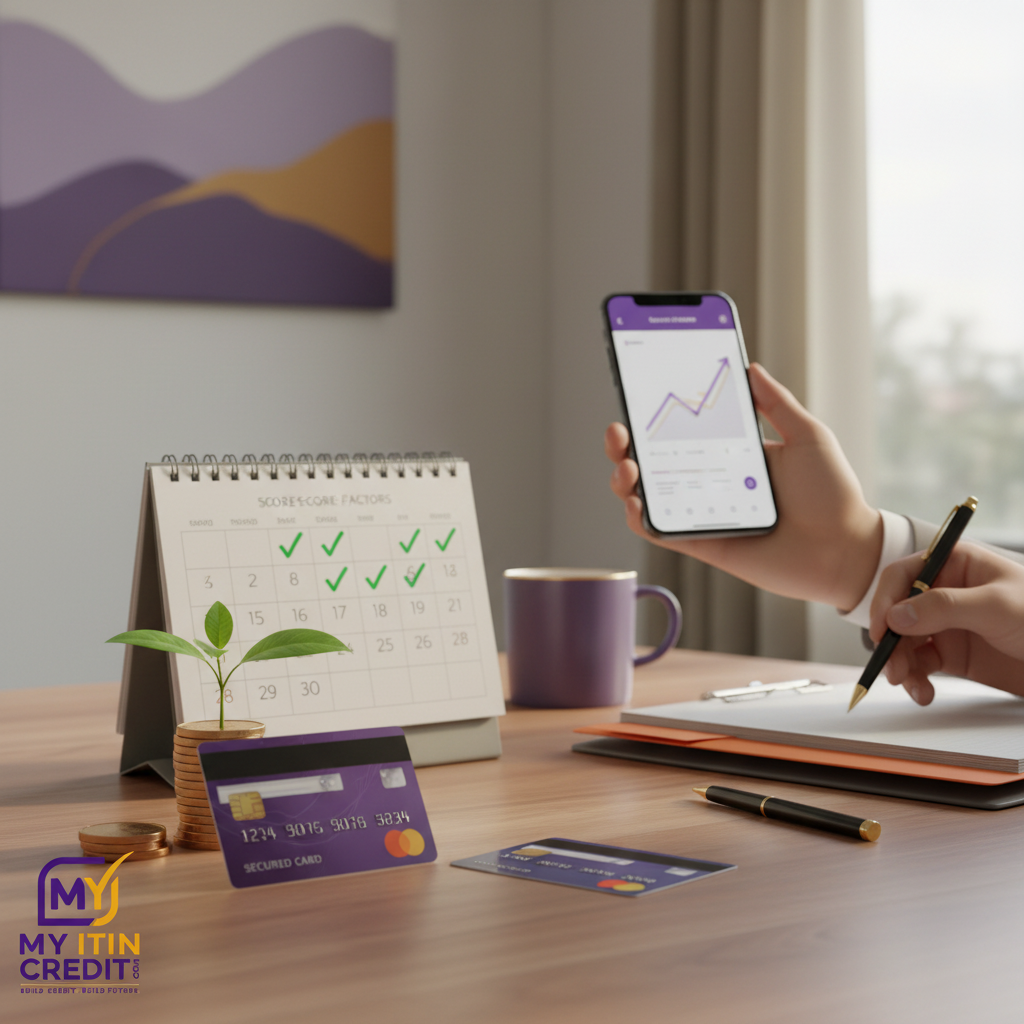
Understanding Different ITIN Credit Card Types
Explore the various kinds of credit cards available for ITIN holders, from secured options to co-signed cards, and how each builds your credit.

Building Credit: Your First ITIN Credit Card Without an SSN
Starting your credit journey with an ITIN and no SSN is possible. Learn which credit cards you can apply for and what documents you'll need.

Banks Issuing Credit Cards to ITIN Holders in 2026
Curious which financial institutions offer credit cards to ITIN holders? We break down which banks to consider and what they look for in applicants.
Increase Your ITIN Credit Card Approval Odds
Understand the real factors lenders consider for ITIN credit card applications, from credit history to income, and how to improve your chances.
Building Credit with ITIN Store Cards: Your Retail Options
Explore how store credit cards can help ITIN holders establish a credit history in the U.S. Learn common requirements and if they're the right fit for you.